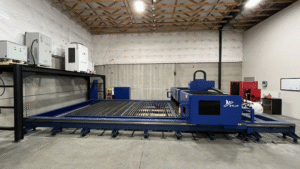
The automotive industry continues to evolve under pressure from electrification, lightweighting, stricter safety standards, and higher production efficiency. To meet these demands, manufacturers are adopting advanced joining technologies that deliver precision, strength, and consistency at scale. Laser welding has become one of the most widely used solutions across global automotive production lines.
This article explores how laser welding is applied in real-world automotive manufacturing and why it has become a core technology for OEMs and Tier 1 suppliers in the United States, Mexico, and beyond.
Why Laser Welding Is Critical in Automotive Manufacturing
Automotive components often involve high-strength materials, complex geometries, and demanding quality standards. Laser welding offers several advantages that align well with these requirements:
High welding speed, supporting mass production
Deep penetration with narrow weld seams, improving joint strength
Low heat distortion, especially important for thin or coated materials
Excellent repeatability, ideal for automated production lines
Easy integration with robotics and inline inspection systems
These benefits make laser welding a preferred choice for both traditional internal combustion vehicles and electric vehicles (EVs).
Key Applications of Laser Welding in the Automotive Industry
1. Body-in-White (BIW) and Structural Components
One of the most common uses of laser welding is in body-in-white assembly, where vehicle frames and panels are joined before painting.
Laser welding is widely applied to:
Roof seams and side panels
Door frames and pillars (A, B, and C pillars)
Floor assemblies and cross members
For example, many OEMs use laser welding to create continuous roof seams that improve body stiffness while eliminating the need for external trim. This results in a cleaner vehicle design and reduced weight.
2. Tailor Welded Blanks (TWB)
Tailor welded blanks are sheets of different thicknesses or materials welded together before stamping. Laser welding is the standard process for producing TWBs.
Practical benefits include:
Optimized material usage
Improved crash performance
Reduced vehicle weight
In real production environments, laser-welded blanks allow manufacturers to reinforce high-stress areas—such as door rings or side impact zones—while keeping other areas lighter.
3. Powertrain and Transmission Components
Laser welding is extensively used for high-precision powertrain parts that require strong, leak-free joints.
Typical applications include:
Gears and shafts
Transmission components
Turbocharger parts
Differential housings
Because laser welding creates narrow, deep welds with minimal distortion, it helps maintain tight tolerances, reducing the need for post-weld machining.
4. Automotive Exhaust Systems
Exhaust components are exposed to high temperatures, vibration, and corrosive environments. Laser welding provides durable joints that withstand these conditions.
Applications include:
Exhaust manifolds
Catalytic converter housings
Exhaust pipes and flanges
Compared to traditional arc welding, laser welding improves seam consistency and reduces material deformation, which is critical for maintaining proper exhaust flow.
5. Electric Vehicle (EV) Battery Systems
As EV production expands in North America, laser welding plays a central role in battery manufacturing.
Laser welding is used for:
Battery cell tabs and busbars
Battery module and pack assembly
Sealing battery housings
For example, copper and aluminum connections in EV battery packs are commonly laser welded to achieve low electrical resistance and high mechanical strength, while minimizing heat input that could damage cells.
6. Automotive Electronics and Sensors
Modern vehicles rely heavily on electronics, including sensors for safety, emissions, and driver assistance systems.
Laser welding is applied to:
Sensor housings
Electronic control unit (ECU) enclosures
Shielding components
The process supports hermetic sealing, which helps protect sensitive electronics from moisture, dust, and vibration.
Supporting Automation and High-Volume Production
Laser welding systems are designed for seamless integration into robotic workcells and fully automated lines. This is especially important for automotive plants in Mexico that serve global OEMs and export markets.
Key automation benefits include:
Consistent weld quality across multiple shifts
Reduced labor dependency
Inline quality monitoring and data tracking
Compatibility with Industry 4.0 manufacturing strategies
These features help manufacturers meet global quality standards while controlling production costs.
Quality, Safety, and Compliance Considerations
Automotive manufacturers must comply with strict safety and durability standards. Laser welding supports these requirements by delivering:
Strong, repeatable welds
Improved fatigue resistance
Reduced rework and scrap rates
In safety-critical components, such as structural parts and battery systems, laser welding provides the process stability needed for long-term reliability.
Choosing the Right Laser Welding Solution for Automotive Applications
When implementing laser welding in automotive production, manufacturers should evaluate:
Material types (steel, aluminum, copper, advanced alloys)
Required penetration depth and weld geometry
Cycle time and production volume
System integration with existing lines
Local technical support in the US and Mexico
Selecting the right equipment and process partner is essential for maximizing return on investment.
Conclusion
Laser welding has become a cornerstone technology in the automotive industry, supporting everything from body structures and powertrain components to EV batteries and electronic systems. Its precision, speed, and compatibility with automation make it well suited for modern vehicle manufacturing.
For automotive manufacturers and suppliers operating in international trade, especially across North American markets, laser welding offers a practical and scalable solution that improves product quality, production efficiency, and global competitiveness.