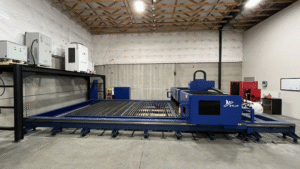
Regular maintenance is the key to keeping your laser cutting machine operating at peak performance. This comprehensive guide covers daily, weekly, monthly, and annual maintenance tasks for fiber laser, CO2 laser, and Nd:YAG laser cutting systems.
Why Laser Machine Maintenance Matters
Proper maintenance directly impacts cut quality, machine lifespan, operating costs, and safety. With proper care, your laser machine can last 10-15+ years.
| Maintenance Level | Frequency | Time Required | Key Tasks |
|---|---|---|---|
| Daily | Every shift | 10-15 minutes | Cleaning, visual inspection |
| Weekly | 1x per week | 30-60 minutes | Deep cleaning, lubrication |
| Monthly | 1x per month | 2-4 hours | Component inspection, calibration |
| Annual | 1x per year | Full day | Professional service, parts replacement |
Daily Maintenance Checklist
Before Starting the Machine
- Check coolant level – Ensure the reservoir is filled to the proper level (typically 70-80% full)
- Inspect laser protective window – Verify no cracks or contamination
- Check focusing assembly – Ensure lens is clean and properly seated
- Verify gas pressure – Check assist gas cylinder levels and regulator settings
During Operation
- Monitor coolant temperature (should remain below 35?C/95?F)
- Listen for abnormal sounds (grinding, squeaking)
- Check cut quality consistency throughout the job
After Shutting Down
- Clean the worktable and support grid
- Remove all metal debris from the cutting area
- Wipe down the machine exterior
- Cover the machine if leaving unused for extended periods
Weekly Maintenance Tasks
Optics System Cleaning
Laser Collimator and Focusing Lens:
- Turn off the laser completely and wait 10 minutes
- Remove the collimator assembly following manufacturer instructions
- Clean with lint-free optical wipes
- Use approved lens cleaning solution (never use abrasive materials)
- Inspect for scratches, pitting, or contamination
- Reinstall carefully, ensuring proper alignment
Mirror Maintenance (for CO2 lasers):
- Clean with specialized CO2 mirror cleaning wipes
- Check for gold coating degradation
- Replace if visible damage or reduced reflectivity
Assist Gas System
| Gas Type | Purity Required | Typical Use | Maintenance |
|---|---|---|---|
| Nitrogen | 99.9%+ | Stainless steel cutting | Check purity, filter replacement |
| Oxygen | 99.5%+ | Carbon steel cutting | Check regulator, leak test |
| Compressed Air | Dry, oil-free | Non-metals | Check dryer, filter bowl |
| Argon | 99.9%+ | Aluminum, copper | Check gas saver function |
Coolant System Maintenance
For fiber laser machines:
- Check coolant concentration (typically 10-15% concentrate, balance distilled water)
- Test pH level (maintain between 7.0-8.5)
- Check for bacterial growth (foul odor indicates contamination)
- Top up or change coolant as needed
Coolant replacement intervals:
- Normal use: Every 6-12 months
- High ambient temperature: Every 3-6 months
- Heavy use: More frequent changes may be required
Monthly Maintenance Procedures
Mechanical Components
1. Linear Guides and Rails
- Clean accumulated debris and dust
- Check for smooth, uniform motion
- Apply appropriate lubricant (manufacturer-specified)
- Inspect for wear or damage
2. Ball Screws
- Clean and relubricate
- Check for backlash (should be minimal)
- Inspect for unusual noise during operation
3. Drive System
- Check belt tension (for belt-driven systems)
- Inspect gear wear
- Verify all bolts are properly tightened
Electrical Systems
- Visual inspection – Check all cables for damage
- Connection verification – Ensure all electrical connections are secure
- Grounding test – Verify proper grounding
- Emergency stop function – Test all E-stop buttons
Calibration Verification
Laser power calibration:
- Use a laser power meter to verify output
- Compare reading to machine specifications
- Adjust if output deviates more than 5%
Beam alignment:
- Fire laser at reduced power
- Use beam diagnostic equipment
- Verify beam centering at all delivery points
- Adjust if misalignment detected
Annual Professional Service
Annual maintenance should be performed by qualified technicians and includes comprehensive inspection, electrical system testing, laser output verification, safety system testing, and all???????????
Parts Replacement Schedule
| Component | Typical Lifespan | Replacement Indicator |
|---|---|---|
| Laser lens | 1-3 years | Visible damage, reduced cut quality |
| Nozzle | 3-12 months | Erosion, damage |
| Belts | 1-2 years | Cracking, stretching |
| Seals/O-rings | 1-2 years | Hardening, leaks |
| Filters | 6-12 months | Visible contamination |
Troubleshooting Common Issues
Problem: Uneven Cut Edges
Possible causes:
- Focus point not at optimal position
- Nozzle damage or wear
- Lens contamination
- Assist gas pressure inconsistency
- Beam misalignment
Solutions:
- Recalibrate focus height
- Replace nozzle
- Clean or replace lens
- Adjust gas pressure
- Perform beam alignment procedure
Problem: Reduced Cutting Speed
Possible causes:
- Low laser power output
- Contaminated optics
- Coolant temperature too high
- Gas pressure issues
Solutions:
- Test laser power and recalibrate
- Clean all optics components
- Check cooling system operation
- Verify gas supply and pressure
Problem: Excessive Dross
Possible causes:
- Incorrect focus height
- Low assist gas pressure
- Wrong gas type for material
- Nozzle too large
Solutions:
- Adjust focus position for material thickness
- Increase assist gas pressure
- Verify correct gas selection
- Use appropriate nozzle size
Safety Considerations
Essential Safety Practices
- Never bypass safety interlocks – Always keep protective covers in place
- Use proper PPE – Safety glasses rated for laser wavelength
- Maintain fire suppression – Keep fire extinguisher nearby
- Ventilation requirements – Ensure adequate fume extraction
- Lockout/tagout procedures – Follow when servicing laser system
Eye Protection Requirements
| Laser Type | Wavelength | Required Protection |
|---|---|---|
| Fiber Laser | 1064nm | Class 4 laser safety glasses |
| CO2 Laser | 10.6?m | Class 4 laser safety glasses |
| Nd:YAG | 1064nm | Class 4 laser safety glasses |
Fire Prevention
- Keep cutting area clear of flammables
- Never leave machine unattended during operation
- Have fire extinguisher rated for electrical fires (Class C)
- Install smoke detectors near laser work areas
Conclusion
Regular maintenance is an investment in your laser cutting machine’s performance and longevity. By following this guide, you can expect improved cut quality, reduced downtime, and extended equipment life. Remember to always consult your machine’s specific manual for manufacturer-specific procedures and recommendations.
For professional maintenance services or genuine replacement parts, contact MetalBaja’s technical support team.
Ready to optimize your laser cutting operations? Contact our experts for personalized maintenance plans and genuine replacement parts.
- ?? +1 909 687 8149
- ?? sales@metalbaja.com
- ?? https://metalbaja.com