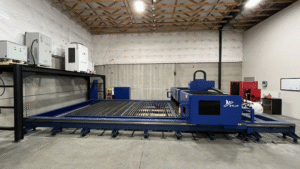
The laser cutting industry is evolving faster than ever in 2026. Ultra-fast fiber lasers, AI-powered automation, and green manufacturing are the three biggest forces driving change. The global laser cutting machines market is projected to grow at 7.45% CAGR, reaching over $14.8 billion by 2026. Here are the 7 key trends every manufacturer and buyer needs to know.
1. Ultra-High Power Fiber Lasers (20kW–60kW)
The trend: Fiber laser power is pushing well beyond 20kW, with some manufacturers now offering 40kW and even 60kW systems for ultra-thick plate cutting.
Why this matters:
- A 30kW fiber laser can cut 50mm carbon steel at speeds previously impossible
- Higher power means fewer passes and cleaner edges on thick materials
- Reflective metals like brass, copper, and aluminum are now cut with ease
Impact on buyers: If you’re cutting thick plates (>20mm steel), investing in a 12kW–30kW system now offers the best ROI. Entry-level high-power systems start around USD 80,000–150,000.
| Power Level | Max Steel Thickness | Cutting Speed (10mm Steel) | Price Range |
|---|---|---|---|
| 6kW | 20mm | 2.5 m/min | USD 45,000–80,000 |
| 12kW | 40mm | 4.8 m/min | USD 80,000–140,000 |
| 20kW | 50mm | 6.5 m/min | USD 140,000–240,000 |
| 30kW+ | 60mm+ | 8+ m/min | USD 200,000+ |
2. AI-Powered Cutting Optimization
The trend: Artificial intelligence is transforming laser cutting from a skill-dependent process into a smart, self-optimizing system.
Key AI capabilities in 2026:
- Real-time parameter adjustment — AI monitors cut quality and automatically adjusts power, speed, and gas pressure
- Predictive maintenance — Machine learning algorithms predict component failures before they happen, reducing unplanned downtime by up to 40%
- Nesting optimization — AI-driven nesting software reduces material waste by 15–25% compared to manual nesting
- Quality inspection — Computer vision detects cut defects instantly, eliminating manual inspection bottlenecks
Real-world example: A metal fabrication shop using AI-optimized nesting reported 22% material savings and 35% faster setup times.
3. Full Automation and Lights-Out Manufacturing
The trend: Robotic loading/unloading, automated material handling, and integrated sorting systems are making fully unmanned laser cutting a reality.
What “lights-out” laser cutting looks like in 2026:
- Automated sheet loading from raw material towers
- AI-optimized cutting with zero operator intervention
- Robotic part sorting and stacking by order
- Automated scrap removal and recycling
- Remote monitoring via smartphone or dashboard
The numbers: According to industry statistics, 39,600 CO₂ machines are now deployed with robotic automation, delivering a reported 28% productivity increase.
Cost consideration: A fully automated fiber laser cell (machine + automation) costs USD 200,000–500,000, but typically pays for itself within 18–24 months through labor savings and increased throughput.
4. Green Manufacturing and Energy Efficiency
The trend: Sustainability is no longer optional. New-generation fiber lasers consume 50–70% less electricity than CO2 lasers, and manufacturers are integrating energy recovery systems.
Key developments:
- Energy-efficient laser sources — New fiber lasers achieve wall-plug efficiency above 45%, up from 30% just three years ago
- Eco-friendly assist gases — Nitrogen recycling systems reduce gas consumption by up to 60%
- Heat recovery — Chiller waste heat is being captured for facility heating
- Recyclable cutting tables — Modular support grids with easy material separation for recycling
Why buyers care: Lower energy consumption directly reduces operating costs. A modern 6kW fiber laser costs approximately USD 3–5 per hour to operate, compared to USD 15–20 for an equivalent CO2 system.
5. Multi-Material and Multi-Process Machines
The trend: Single machines that can cut, weld, and mark across multiple materials are gaining popularity.
What’s new in 2026:
- Tube and sheet combo machines — Cut both flat sheets and tubes/pipes on one machine
- Laser cutting + welding heads — Switch between cutting and welding without changing machines
- Multi-material capability — Advanced fiber lasers that handle metal, composites, and even certain plastics
- 3D cutting — Five-axis laser cutting for automotive and aerospace parts
Best for: Job shops that handle diverse materials and need maximum flexibility from their equipment investment.
6. IoT and Smart Factory Integration
The trend: Laser cutting machines are becoming connected nodes in the smart factory ecosystem.
How IoT is changing laser cutting:
- Cloud-based monitoring — Track machine status, production metrics, and maintenance needs from anywhere
- ERP integration — Orders flow directly from business systems to the cutting machine
- Digital twins — Virtual replicas of your machine simulate jobs before cutting starts
- OEE tracking — Real-time Overall Equipment Effectiveness dashboards identify bottlenecks
Practical benefit: Manufacturers report 15–20% improvement in machine utilization after implementing IoT monitoring, simply by reducing idle time and optimizing job scheduling.
7. Compact Desktop and Entry-Level Systems
The trend: Not all innovation is about bigger and faster. Affordable, compact laser systems are opening the market to small businesses and makerspaces.
2026 entry-level options:
- Desktop fiber lasers (500W–1.5kW) — USD 8,000–20,000, perfect for small metal parts
- Enclosed CO2 systems — USD 3,000–8,000 for non-metal cutting
- Improved software — Tools like LightBurn and the upcoming Millmage make setup easier than ever
Who benefits: Small businesses, prototyping shops, educational institutions, and entrepreneurs entering the metal fabrication market.
How to Choose the Right Laser Cutting Machine in 2026
With so many options, here’s a quick decision framework:
| Your Need | Recommended Technology | Budget Range |
|---|---|---|
| Thin metal cutting (<6mm) | 1.5–3kW fiber laser | USD 15,000–45,000 |
| General metal fabrication | 3–6kW fiber laser | USD 35,000–85,000 |
| Thick plate cutting (>20mm) | 12–30kW fiber laser | USD 80,000–240,000 |
| Non-metal materials | CO2 laser (100–400W) | USD 3,000–40,000 |
| Full automation needs | Fiber laser + robotic cell | USD 200,000–500,000 |
| Small shop/prototyping | Desktop fiber (500W–1.5kW) | USD 8,000–20,000 |
FAQ
What is the biggest laser cutting trend in 2026?
AI-powered automation is the single biggest trend. It reduces material waste by 15–25%, cuts setup time by up to 35%, and enables predictive maintenance that reduces unplanned downtime by 40%.
How much does a modern fiber laser cutting machine cost?
Prices range from USD 15,000 for entry-level 1.5kW systems to over USD 240,000 for industrial 20kW+ machines. Most mid-size manufacturers invest USD 40,000–85,000 in 3–6kW systems.
Is CO2 laser cutting still relevant in 2026?
Yes, for non-metal materials like wood, acrylic, fabric, and leather. CO2 lasers remain the best choice for these applications, though fiber lasers dominate the metal cutting market with over 70% market share.
What is the ROI on a fully automated laser cutting system?
Most fully automated systems (USD 200,000–500,000) pay for themselves within 18–24 months through labor savings, increased throughput, and reduced material waste.
How is AI being used in laser cutting?
AI optimizes nesting patterns to reduce waste, adjusts cutting parameters in real-time for better quality, predicts maintenance needs before failures occur, and uses computer vision for automated quality inspection.
Conclusion
2026 is a transformational year for laser cutting technology. Whether you’re upgrading an existing operation or entering the market for the first time, the key takeaway is clear: invest in fiber laser technology with AI capabilities for the best long-term ROI.
The machines are faster, smarter, and more energy-efficient than ever. And with entry-level systems starting under USD 15,000, there’s never been a better time to adopt laser cutting technology.
Ready to invest in the latest laser cutting technology? Contact MetalBaja for expert guidance and competitive pricing on fiber laser cutting machines.
- 📞 +1 909 687 8149
- 📧 sales@metalbaja.com
- 🌐 https://metalbaja.com