How to Select the Perfect High Power Laser Pointer for Your Needs
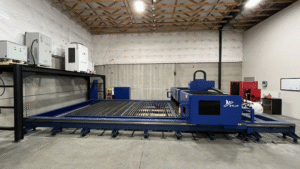
When industrial professionals search for a high power laser pointer, they are rarely looking for a handheld presentation tool. In the world of metal fabrication, manufacturing, and precision engineering, a high power laser pointer refers to the broader category of high-powered laser systems capable of cutting, engraving, and marking a wide range of materials with pinpoint accuracy. These machines have become the backbone of modern fabrication shops, and selecting the right one can mean the difference between a thriving operation and a costly misstep.
Whether you are outfitting a new shop, upgrading aging equipment, or expanding your production capabilities, this guide walks you through the critical factors that determine which high power laser system is the right fit for your business. From wattage and bed size to software compatibility and total cost of ownership, we cover everything a procurement manager, shop owner, or engineer needs to make a confident investment.
Understanding Laser Power Ratings and What They Mean for Your Operation
The single most important specification on any high power laser system is its wattage. Laser power directly determines what materials you can process, how thick you can cut, and how fast your production runs. Getting this decision wrong leads to either wasted capital on capacity you do not need or, worse, a machine that cannot handle your workload.
Power Tiers and Their Applications
| Power Range | Typical Applications | Max Steel Thickness | Approximate Price Range |
|---|---|---|---|
| 1,000W – 2,000W | Thin sheet metal, signage, decorative work, light fabrication | Up to 8 mm mild steel | $3,000 – $12,000 |
| 3,000W – 6,000W | General fabrication, structural components, automotive parts, HVAC | Up to 16 mm mild steel | $15,000 – $35,000 |
| 8,000W – 12,000W | Heavy plate cutting, shipbuilding components, heavy equipment manufacturing | Up to 30 mm mild steel | $35,000 – $60,000 |
| 15,000W – 40,000W | Ultra-thick plate, high-volume production, aerospace-grade processing | Up to 80 mm+ mild steel | $50,000 – $80,000+ |
A common mistake among first-time buyers is over-specifying power. If 90% of your jobs involve 6 mm mild steel and 3 mm stainless, a 3,000W fiber laser handles that work efficiently. Jumping to a 12,000W machine triples your capital expenditure without proportionally increasing your revenue unless you have confirmed contracts that demand heavier plate work.
Conversely, under-specifying is equally dangerous. A machine running consistently at its maximum rated thickness produces slower cuts, rougher edge quality, and accelerated wear on consumables. The ideal operating range sits at roughly 60–75% of the machine’s maximum capacity. This allows headroom for thicker jobs while maintaining speed and quality on everyday production.
Fiber Laser vs. CO2 Laser: Which Technology Fits Your Shop?
The laser source technology you choose shapes your operating costs, maintenance schedule, and material versatility for years to come. Two dominant technologies compete in the market today, and each has clear strengths.
Fiber Lasers
- Best for: metals including mild steel, stainless steel, aluminum, brass, copper, and galvanized sheet
- Electrical efficiency: approximately 30–35%, roughly three times more efficient than CO2 systems
- Maintenance: minimal — no mirrors to align, no laser gas to replace, diode source lasts 100,000+ hours
- Cutting speed: up to 2–3 times faster than CO2 on thin metals (under 6 mm)
- Limitations: less effective on thick non-metallic materials such as wood, acrylic, and textiles
CO2 Lasers
- Best for: mixed-material shops processing wood, plastics, leather, glass, and metals
- Electrical efficiency: approximately 10–15%
- Maintenance: higher — requires regular mirror alignment, gas refills, and tube replacement every 2–4 years
- Cutting speed: competitive on thick materials (20 mm+ steel) but slower on thin sheet
- Limitations: higher operating cost per hour, larger physical footprint
For the majority of metal fabrication shops in the United States, fiber laser technology has become the standard. The lower operating costs alone — often 50–70% less per cutting hour compared to CO2 — justify the investment. However, if your shop regularly processes non-metallic materials alongside metals, a CO2 system or a dual-source configuration may offer better overall versatility.
Key Specifications Beyond Wattage That Affect Your Bottom Line
Power gets the headlines, but several other specifications have an outsized impact on daily productivity and long-term profitability. Overlooking these details during procurement is one of the most common and costly mistakes in the industry.
Bed Size and Work Area
Standard bed sizes range from 1500 mm × 3000 mm (5 ft × 10 ft) to 2000 mm × 6000 mm (6.5 ft × 20 ft). Your bed size should accommodate the largest sheet format you regularly process without requiring secondary cutting. Processing full 4 ft × 8 ft sheets is the most common requirement in North American shops. If your production involves longer structural members or plate, consider 6000 mm or 12000 mm bed options to eliminate material handling bottlenecks.
Positioning Accuracy and Repeatability
Look for positioning accuracy of ±0.03 mm or better and repeatability of ±0.02 mm. These numbers matter most when you are producing parts with tight tolerances for industries like automotive, medical devices, or aerospace sub-assemblies. Machines that quote only “accuracy” without specifying repeatability should prompt further questioning from your engineering team.
Acceleration and Rapid Traverse Speed
A machine’s maximum cutting speed is only relevant on long, straight runs. In real-world production — where parts have curves, corners, holes, and complex geometries — acceleration matters more. High-performance systems offer acceleration rates of 1.0 G to 1.5 G, significantly reducing cycle times on intricate parts. A machine with a 1.5 G acceleration rate can reduce total processing time by 20–30% compared to a 0.8 G system on complex nesting layouts, even if both machines share the same maximum traverse speed.
Automated Features
- Automatic nozzle changing: eliminates manual intervention between material types and thicknesses
- Sheet loading and unloading systems: essential for lights-out or reduced-labor operation, can increase throughput by 25–40%
- Automatic focus adjustment: reduces setup time between jobs from minutes to seconds
- Edge-finding and calibration sensors: minimize material waste on each sheet
Each of these features adds to the upfront cost, but in a shop running two or three shifts, the payback period on automation is typically under 12 months based on labor savings alone.
Total Cost of Ownership: Looking Beyond the Purchase Price
The sticker price on a high power laser system represents only a portion of your true investment. Experienced procurement managers evaluate total cost of ownership (TCO) across a five-year horizon before signing a purchase order. Here are the categories that often surprise first-time buyers.
Operating Costs
- Electricity: a 6,000W fiber laser typically consumes 15–20 kW total (including chiller and exhaust). At an average US industrial rate of $0.08/kWh, that is roughly $1.20–$1.60 per operating hour.
- Assist gas: nitrogen and oxygen consumption varies by material and thickness. Budget $3–$8 per hour for standard nitrogen-assist cutting on stainless steel. Oxygen-assist cutting on mild steel costs less, typically $1–$3 per hour.
- Consumables: nozzles, protective lenses, and ceramic rings represent $2,000–$5,000 annually depending on usage intensity.
Maintenance and Downtime
Fiber lasers have dramatically reduced maintenance requirements compared to previous-generation technology. However, the mechanical components — linear guides, rack and pinion drives, bellows covers, and the chiller unit — still require scheduled attention. Plan for $1,500–$4,000 in annual preventive maintenance costs. More importantly, evaluate the manufacturer’s service network in your region. A machine with a 48-hour service response time in the continental US costs your shop far less downtime than a lower-priced alternative with a 10-day parts lead time from overseas.
Software and Training
Modern laser systems ship with proprietary or third-party nesting and CAM software. Verify compatibility with your existing CAD workflow — SolidWorks, AutoCAD, or Fusion 360 — before purchasing. Some manufacturers include software licensing in the machine price; others charge $2,000–$8,000 annually for premium nesting optimization packages. Training for operators typically requires 3–5 days for basic operation and an additional 1–2 weeks to reach full productivity on complex jobs.
Practical Recommendations by Shop Type
To simplify your decision, here are targeted recommendations based on common shop profiles across the US market.
Small Job Shop (1–10 employees)
A 3,000W fiber laser with a 1500 × 3000 mm bed represents the best balance of capability, footprint, and investment. Budget $15,000–$25,000 for the machine and an additional $3,000–$5,000 for installation, extraction, and initial consumables. This configuration handles the vast majority of custom fabrication, signage, and light structural work while keeping overhead manageable.
Mid-Size Fabrication Shop (10–50 employees)
Consider a 6,000W–8,000W fiber laser with a 2000 × 4000 mm or larger bed, automatic sheet exchange, and integrated nesting software. Budget $30,000–$50,000. At this scale, automation features pay for themselves quickly. Look for machines with remote diagnostics and predictive maintenance capabilities to minimize unplanned downtime.
High-Volume Production Facility (50+ employees)
Invest in 12,000W or higher systems with full material handling automation, multiple shuttle tables, and enterprise-level software integration. Budget $50,000–$80,000+ per machine. At this level, cutting speed per part and overall equipment effectiveness (OEE) are your primary metrics. Evaluate machines based on documented cycle times for your specific part mix rather than specification sheets alone.
Making Your Decision with Confidence
Selecting the right high power laser system is a decision that will shape your shop’s capabilities and profitability for the next decade. The most successful buyers follow a disciplined process: define your material mix and thickness requirements first, size the power accordingly, evaluate total cost of ownership rather than purchase price alone, and prioritize service and support infrastructure alongside machine specifications.
Avoid the temptation to buy based on maximum specifications or lowest price. Neither approach serves your business. Instead, match the machine to your actual production needs with a reasonable margin for growth, and invest in a supplier relationship that supports you long after the installation crew leaves your facility.
At MetalBaja, we specialize in helping fabrication businesses across the United States find the right laser cutting solution for their specific operation. Our team of engineers and industry specialists works with you to evaluate your production requirements, recommend the optimal machine configuration, and provide ongoing technical support from installation through years of production. Whether you are purchasing your first laser system or adding capacity to an established operation, we are here to ensure your investment delivers measurable returns.
Ready to find the right laser system for your shop? Contact MetalBaja today for a personalized consultation. Our team will analyze your material mix, production volume, and growth plans to recommend the ideal configuration — backed by transparent pricing and dedicated after-sale support. Reach out through our website or call our US-based sales team to get started.