...

Laser Solutions for Automotive Industry

Precision laser technology for lightweighting, safety, and performance.
Key Applications

Critical Automotive Applications

From powertrain to body structure, laser technology drives quality.

Exhaust Systems

Laser welding creates hermetic seals on stainless steel mufflers and catalytic converters. The concentrated heat input minimizes distortion, ensuring perfect fitment while maintaining the corrosion resistance of the material.

Body-in-White (BIW)

Cutting and trimming of hot-stamped boron steel parts, such as B-pillars and door beams. Laser processing is the only viable method for these ultra-hard materials, delivering clean edges without mechanical stress.
Why Laser

Why Upgrade to Fiber Laser?

Speed, precision, and lower costs. Replace your CNC routers and plasma cutters with the industry standard for metal processing.
No Secondary Polishing

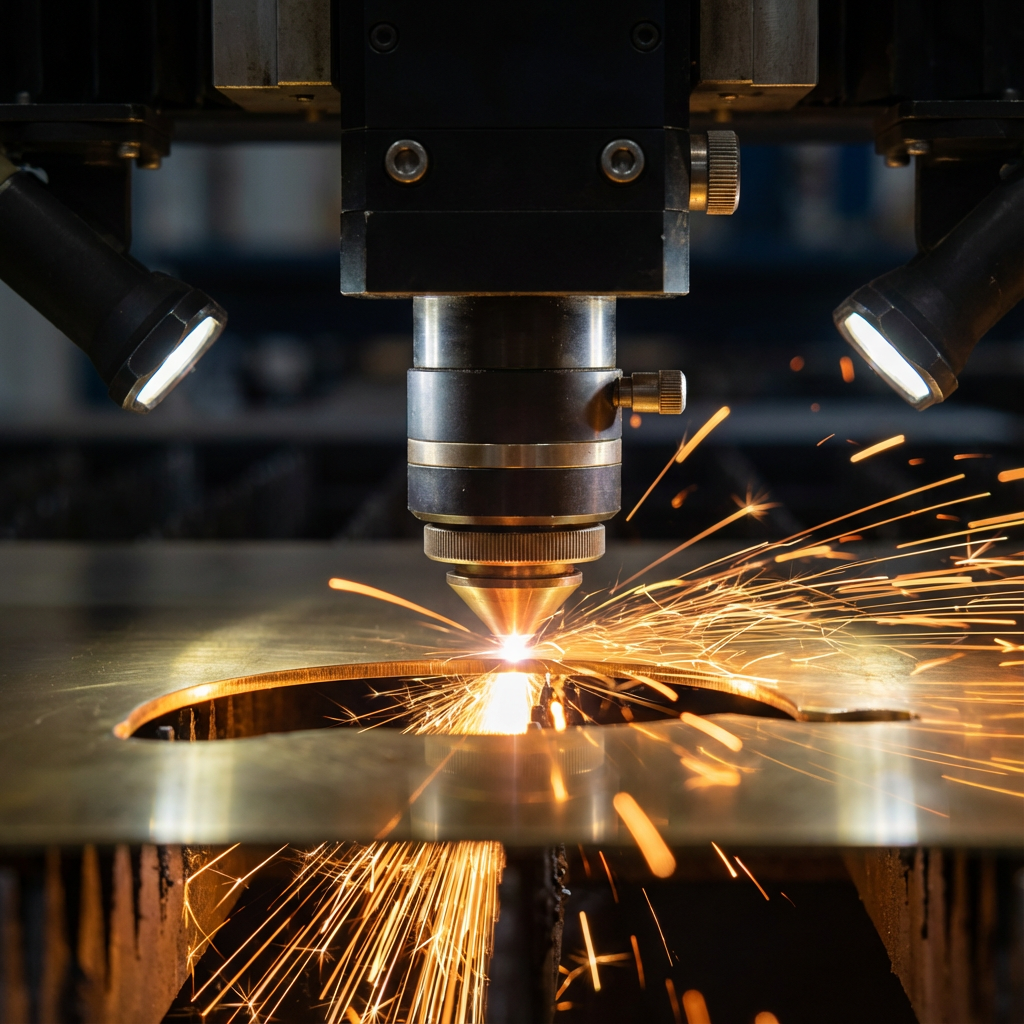
Get a mirror-finish edge directly off the machine. Save hours on manual grinding.

Cut Reflective Metals Safely

Our Anti-Reflection technology handles Brass and Copper with zero risk to the laser source.

Unmatched Precision (±0.03mm)

Cut sharp corners and tiny text that CNC tools simply cannot achieve.

Zero Tool Wear

No drill bits to break or replace. Laser is a non-contact tool with minimal maintenance.

Driving Production Forward

How do I process ultra-high-strength steel (UHSS) without tool wear?
Laser cutting is a non-contact process, so there are no mechanical blades to dull. It cuts through hardened boron steel and hot-stamped parts as easily as mild steel.
Can I weld dissimilar metals for vehicle lightweighting?
Yes. Laser welding offers precise heat control, enabling strong, reliable bonds between aluminum and steel, which is crucial for modern hybrid chassis designs.
 
How does laser welding affect crash safety?

Laser welds are continuous seams rather than individual spots. This significantly improves the structural rigidity and crashworthiness of the vehicle body compared to traditional resistance spot welding.

Is the process fast enough for mass production lines?

Absolutely. Fiber lasers offer the highest cutting and welding speeds in the industry, easily keeping pace with the rapid cycle times required by automotive assembly lines.

Can the equipment be integrated into robotic cells?
Our laser sources and processing heads are designed for seamless integration with all major industrial robot brands (like Fanuc, ABB, Kuka) for complex 3D cutting and welding tasks.
 
What about heat distortion on thin body panels?

The highly focused laser beam creates a minimal Heat Affected Zone (HAZ), ensuring that Class A surfaces (visible exterior panels) remain distortion-free and require less finishing.

How does this compare to traditional stamping dies?

For prototyping, limited editions, or low-to-medium volume runs, laser cutting eliminates the massive upfront cost and long lead times associated with manufacturing stamping dies.

What is the maintenance requirement for 24/7 operation?
Fiber lasers are solid-state devices with no moving parts in the source. They are specifically engineered for the rigorous reliability demands of continuous automotive production environments.
Do you offer support for process validation?

Yes. Our application engineers at our California center can help you validate weld parameters, test material compatibility, and verify cycle times before you install the equipment on your line.

Recommended Equipment

EF-Hybrid

3-in-1 System: Weld, Clean, Cut.
Why it fits:
  • Weld: Seamless joints for channel letters.
  • Clean: Remove rust/paint before processing.
  • Cut: Quick cutting for thin sheets.
Specs:
  • Power: 1500W / 2000W / 3000W
  • Type: Handheld Gun
  • Application: Signage Assembly & Repair
Customer Case Study

Auto modification & frame fabrication,USA

Challenge :
    Traditional welding for manufacturing automotive seat frames takes several hours, leading to low production efficiency that significantly hinders the progress of daily vehicle modification and thin steel joining projects.
 
Solution :
    The EF-Hybrid welding machine integrated with laser cleaning capability, and apply it to automotive seat frame welding tasks. Laser cleaning enables rapid removal of rust, oil stains and coatings from the steel surface before welding, ensuring the cleanliness of the welding area and thus enhancing welding quality and stability.
 
Customer Quote :
   “The laser cleaning ensures a much more thorough pre-weld treatment; both internal and external weld seams show clear penetration and fully meet strength standards. It has made our daily modification and thin steel joining work a whole lot easier.”
Send us a message

We're here to help.

Contact Us

We Would Love To Hear From You

Seraphinite AcceleratorOptimized by Seraphinite Accelerator
Turns on site high speed to be attractive for people and search engines.