Skip to content
Laser Welding vs MIG vs TIG: Complete 2026 Comparison & Selection Guide
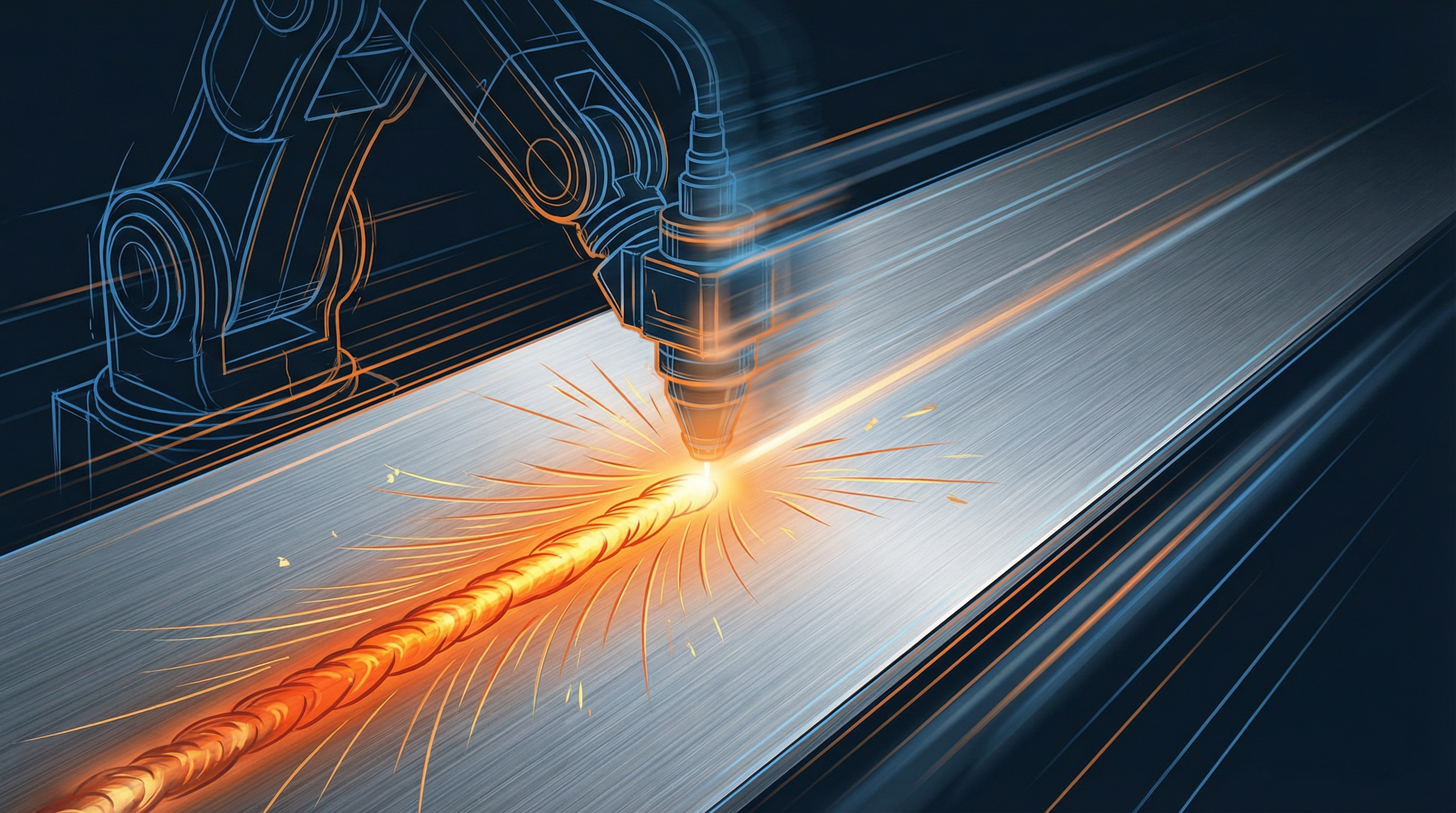
Direct Answer: Laser welding, MIG (GMAW), and TIG (GTAW) each have distinct advantages. Laser welding offers the fastest speed (3-5× faster than MIG), smallest heat-affected zone, and minimal distortion for precision manufacturing; MIG provides the lowest cost and highest efficiency for mass production; TIG delivers the highest weld quality and broadest material compatibility for high-quality manual welding.
Core Technology Comparison
| Factor | Laser Welding | MIG (GMAW) | TIG (GTAW) |
|---|---|---|---|
| Speed | ★★★★★ (Fastest) | ★★★☆☆ (Medium) | ★★☆☆☆ (Slowest) |
| Quality | ★★★★☆ (Excellent) | ★★★☆☆ (Good) | ★★★★★ (Highest) |
| Heat Affected Zone | Smallest (0.5-1mm) | Medium (3-6mm) | Large (5-10mm) |
| Distortion | Minimal | Moderate | Significant |
| Equipment Cost | High ($30,000+) | Low ($2,000-$10,000) | Medium ($3,000-$15,000) |
In-Depth Technical Analysis
Laser Welding Technology
Laser welding uses high-energy-density laser beams as the heat source. Key advantages include:
- Extremely high energy density: Up to 10⁶ W/cm², welding speed of several meters per minute
- Minimal heat input: Heat-affected zone is only 1/10 of conventional welding
- High precision: Weld width controllable at 0.5-2mm
- Non-contact: No electrode wear issues
MIG Welding Technology
MIG uses continuously fed wire as both electrode and filler material:
- High efficiency: Continuous wire feeding, deposition rate 5-10 kg/hr
- Low cost: Simple equipment, inexpensive wire
- Easy to learn: Short training period
- Versatile: Suitable for all positions
TIG Welding Technology
TIG uses non-consumable tungsten electrodes:
- Best weld quality: No spatter, no slag, excellent appearance
- Widest material compatibility: Can weld almost any metal
- Precise control: Large adjustable heat input range
Material Compatibility
| Material | Laser | MIG | TIG | Recommended |
|---|---|---|---|---|
| Carbon Steel | ★★★★★ | ★★★★★ | ★★★★★ | MIG (volume), Laser (precision) |
| Stainless Steel | ★★★★★ | ★★★★☆ | ★★★★★ | TIG (appearance), Laser (speed) |
| Aluminum Alloy | ★★★★☆ | ★★★☆☆ | ★★★★★ | TIG/AC TIG (best) |
| Titanium | ★★★★☆ | ★★☆☆☆ | ★★★★★ | TIG (required) |
Industry Application Recommendations
Automotive Manufacturing
Recommended: Laser (main) + MIG (auxiliary)
- Body-in-white: Laser welding at 6m/min, 10× faster than spot welding
- Exhaust, chassis: MIG for cost efficiency
Aerospace
Recommended: TIG (precision) + Laser (structural)
- Engine components: TIG for 100% quality assurance
- Fuselage skin: Laser welding reduces weight by 15-20%
Medical Devices
Recommended: Laser Welding (Preferred)
- Minimally invasive instruments: No post-processing needed
- Implants: Precise heat input control
Batteries & New Energy
Recommended: Laser Welding (Industry Standard)
- Battery tab welding: Industry standard
- Case sealing: Hermeticity to 10⁻⁹ Pa·m³/s
Cost-Benefit Analysis
| Cost Factor | Laser | MIG | TIG |
|---|---|---|---|
| Equipment Depreciation | $15/hr | $2/hr | $3/hr |
| Consumables | $0.50/part | $1.20/part | $0.80/part |
| Labor | $5/hr | $8/hr | $15/hr |
| Total (100 parts/hr) | $0.90/part | $1.35/part | $2.03/part |
Selection Decision Guide
Q1: What’s your annual production volume?
<10,000 parts → TIG | 10,000-100,000 parts → MIG | >100,000 parts → Laser
Q2: Quality requirements?
Standard industrial → MIG | Food/medical grade → Laser or TIG | Highest appearance → TIG
Q3: Material type?
Standard carbon steel/stainless → All three | Aluminum/titanium → TIG | Dissimilar metals → Laser
Q4: Budget range?
<$10,000 → MIG or TIG | $10,000-$50,000 → High-end MIG/TIG or entry-level laser | >$50,000 → Industrial laser
Frequently Asked Questions
Q1: Can laser welding completely replace MIG and TIG?
Not currently. While laser welding excels in speed and precision, MIG and TIG remain essential for thick plates (>12mm), field repairs, and highly reflective materials like pure copper.
Q2: Is laser welding hazardous to humans?
Laser welding requires strict safety precautions: specialized safety glasses, extraction system for fumes, and protective screens for UV radiation.
Q3: Which welding technology should my factory start with?
Start with MIG: Low investment barrier, fast ROI, wide application range. Upgrade to laser when volume and quality demands increase.
Get Professional Advice
Unsure which welding technology fits your application? Contact Metalbaja’s welding experts for:
- Free process evaluation and welding solution design
- Sample welding and quality validation
- Equipment selection and ROI analysis
- Operator training and technical support
📞 Free Consultation: https://metalbaja.com/contact/
Reference: AWS Welding Handbook Volume 3, IPG Photonics Technical Whitepapers, TWI Welding Research Institute, Metalbaja Application Engineering Data 2026